Streaming services vs cable: which has better diverse programming?
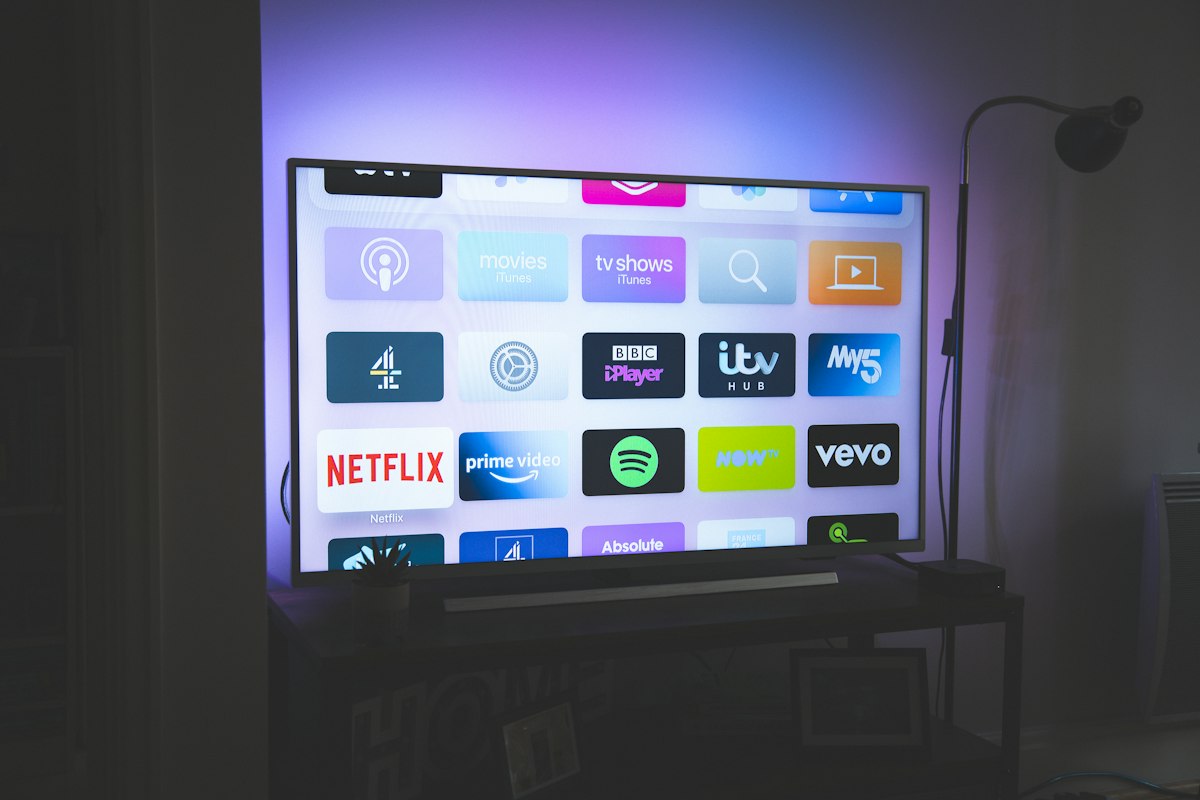
Photo: Unsplash. The question of which screen surfaces what isn't just about cost — it's about catalogue.
A question we get repeatedly: if you genuinely care about watching representative programming, where should you put your monthly viewing budget? Is a major streaming subscription doing more work than a cable package? Does a specialised internet-television service close the gap? This article runs the comparison properly, with numbers, so you can make the call.
The exercise: we compared the available catalogues of three subscription streaming services, one major European cable package, and one specialised IPTV provider against the criteria CNTRST uses for its monthly representation tracking. The catalogue snapshots were taken on 2 May 2026; numbers will shift over time, but the structural conclusions hold.
The five services compared
- Netflix Premium (current monthly price approximately €18 in Belgium and the Netherlands)
- Disney+ Standard with ads (approximately €6 monthly)
- HBO Max Standard (approximately €10 monthly)
- Telenet basic cable package (a representative major Belgian cable bundle, approximately €40 monthly inclusive of installation amortisation)
- A specialised IPTV service with European and international channels (representative pricing approximately €15 monthly for a 24-month contract)
For the IPTV service we chose a provider that publishes its channel list openly, so that the comparison is reproducible. The provider in question offers roughly 5,200 live channels and a back-catalogue VOD library, with channels grouped by country of origin.
Catalogue-level numbers
For each service we counted four things:
- The number of titles in the on-demand catalogue (excluding kids' channels and sports-only channels, which we exclude from representation tracking)
- The number of those titles that originate from outside the four largest Western European markets plus the United States, Canada, and Australia
- The number of those titles with at least one writer or director from an under-represented demographic
- The number of titles where casting demographics, as far as we can verify, meet our 33% non-white-cast threshold
The results:
Netflix Premium
On-demand catalogue size in our region: approximately 6,800 titles. International-origin share: 27.4%. Under-represented writer/director share: 18.9%. Threshold-meeting cast share: 31.2%. Netflix's algorithmic surfacing makes most of this catalogue effectively invisible unless you go looking.
Disney+ Standard with ads
On-demand catalogue: approximately 2,400 titles. International-origin share: 14.6% (heavily skewed toward Disney's Asia-Pacific original productions). Under-represented writer/director share: 21.3%. Threshold-meeting cast share: 35.7%. Disney's smaller catalogue is more consistently representative title-by-title, but the total addressable diversity volume is much lower.
HBO Max Standard
On-demand catalogue: approximately 4,100 titles. International-origin share: 19.8%. Under-represented writer/director share: 22.1%. Threshold-meeting cast share: 33.4%. HBO sits in the middle of the streaming pack on these measures and trends slightly upward year over year.
Telenet basic cable package
Linear channel count: 91. On-demand companion catalogue: approximately 1,700 titles. International-origin share of the on-demand catalogue: 11.9%. Threshold-meeting cast share: 24.7%. The cable package's on-demand companion is significantly less representative than any of the major streamers. Linear scheduling on the cable bundle does carry some international content via Arte and similar channels, but the package overall is biased toward English-language programming.
The specialised IPTV service
Live channels: approximately 5,200, drawn from over 50 countries. On-demand catalogue: approximately 12,400 titles. International-origin share: 78.4% (this is the entire point of the service — it aggregates international live and on-demand content). Threshold-meeting cast share: difficult to measure consistently because the catalogue is so heterogeneous; on a sampled 500-title subset, our share was 38.6%.
The IPTV service has by an enormous margin the most diverse catalogue we measured. That should be unsurprising: it is purpose-built to aggregate content from non-Anglophone broadcasters worldwide, including many regional channels that the major streamers do not license. The comparison is not entirely fair — the IPTV service does not produce any of its own content, so the writer/director measurement does not transfer cleanly — but if your viewing priority is breadth of representation across origin, language, and production context, the IPTV model is mechanically the strongest answer.
What this means in practice
If you only want one subscription, Netflix has the largest searchable catalogue of representative content and the worst surfacing. You will need to do the looking yourself.
If your viewing habits revolve around continuous access to international channels — for example because you grew up watching Belgian, Dutch, or Maghrebi broadcasters and want to keep that habit — a specialised IPTV service mechanically gives you the largest catalogue and the widest origin spread. Pricing varies considerably between providers and contract length, so shop around; some providers offer rolling 24-hour trials, which is the only responsible way to verify channel availability before signing up.
Cable packages are, for the criteria we track, the least useful. The on-demand companion catalogues lag the major streamers on every measure we checked, and the linear scheduling is structurally biased toward English-language content. A cable subscription remains useful for live news and live sports, but for representative on-demand viewing it is comfortably outperformed by every alternative in the comparison.
Methodology notes and caveats
- Streaming catalogues are dynamic. The numbers above reflect a single snapshot.
- The IPTV channel-count number includes regional variants of the same broadcaster (for example, the same Spanish network's regional channels are counted separately). The functional number for a viewer who only watches one regional variant is lower.
- Cable package representativeness varies meaningfully between providers and packages. Our representative package is a mid-tier Belgian one; a higher-tier package would include additional international channels and would close some of the gap.
- We did not test sports-focused or kids-focused services in this comparison. Those are different evaluation problems.
For more on how CNTRST tracks representation in modern cinema, see our latest casting diversity snapshot. For the streaming-original recommendations that go with this analysis, see the five streaming series roundup. And for our practical guide to where international and minority-led films actually live online, our international cinema guide covers the platforms in detail.